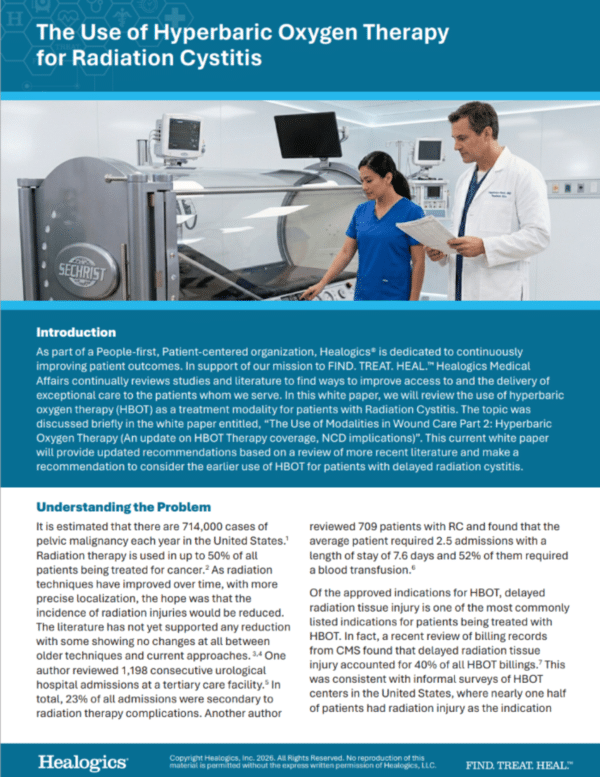
Key Takeaways Radiation cystitis is a serious long-term complication of pelvic radiation that can cause significant bleeding, repeated hospitalizations, transfusions, and a substantial decline in quality of life. Current treatment options often provide only temporary relief or carry meaningful risks. Rather than simply managing symptoms, HBOT treats the underlying radiation damage by promoting new blood…
Learn More
As part of the People-first, Patient-centered focus, Healogics® is dedicated to continuously improving patient outcomes. A process was developed to identify and evaluate critical topics to determine the levers which would result in reducing unwarranted clinical variability across our organization and improve Comprehensive Healing Rates (CHR) amongst our patients. Four levers were identified utilizing the…
Learn More
In the second installment of the use of modalities in wound care white paper, we will review the use of hyperbaric oxygen (HBO therapy) as a lever for reducing unwarranted clinical variability.
Learn More
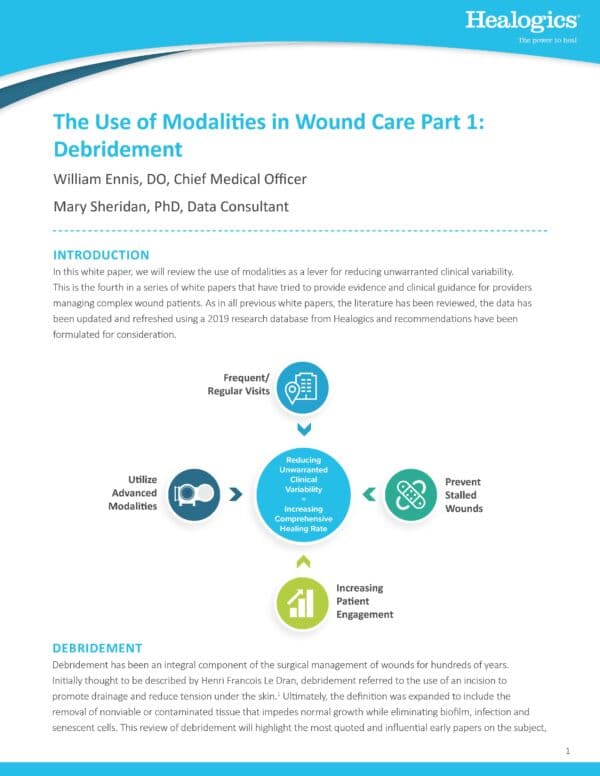
In this white paper, we will review the use of modalities as a lever for reducing unwarranted clinical variability. This is the fourth in a series of white papers that have tried to provide evidence and clinical guidance for providers managing complex wound patients. As in all previous white papers, the literature has been reviewed, the data has been updated and refreshed using a 2019 research database from Healogics and recommendations have been formulated for consideration.
Learn More
As part of our ongoing research aimed at minimizing unwarranted clinical variability and improving healing rates, we have already reported on visit frequency and the impact of wounds that fail to heal on a normal trajectory. In this report, we describe the impact on healing when patients either cancel visits, or completely quit their treatment plan.
Learn More
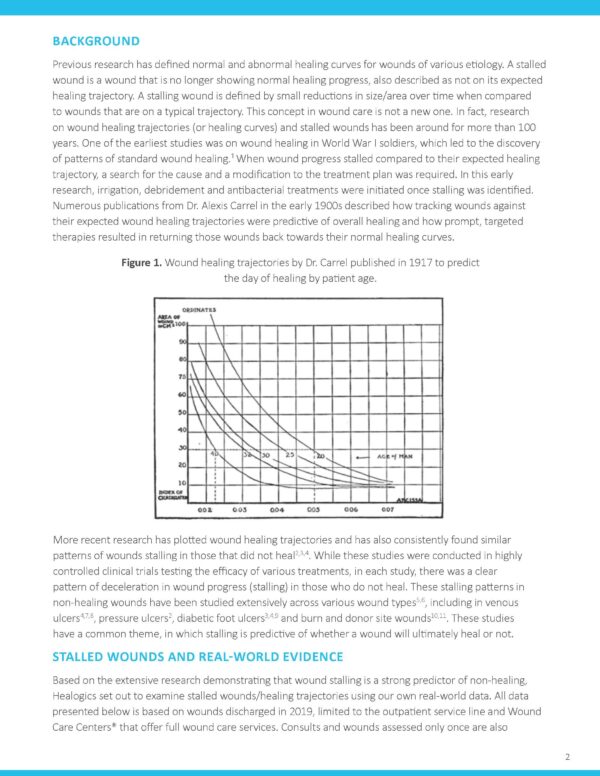
Recently, we introduced four levers that could improve our patient outcomes. These levers included frequent patient visits, the prevention of stalled wounds, improving patient engagement and utilizing advanced modalities. The focus of this paper will be on the evidence and research supporting the key lever of preventing stalled wounds in driving better patient outcomes.
Learn More
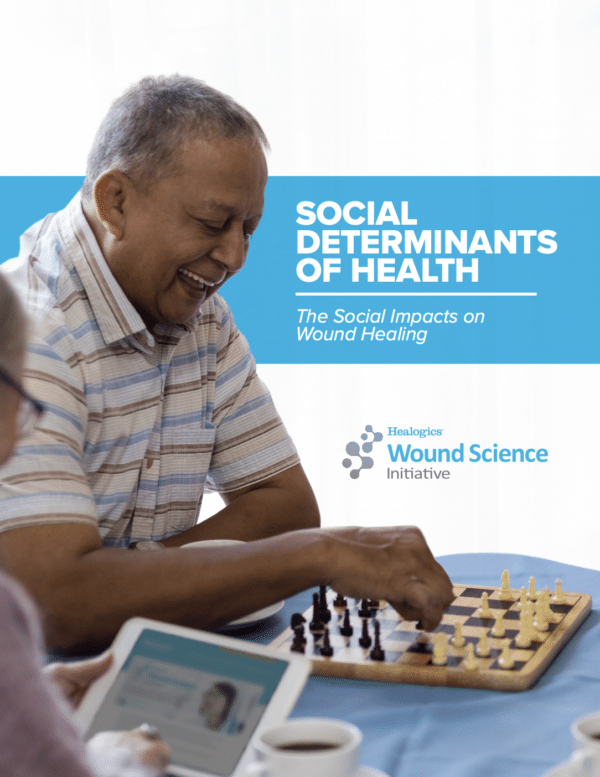
Chronic wound patients face a number of challenges to their health and well-being. The presence of the ulcers is an indication of broader physical systems failures. However, with education and prevention, many wounds could be prevented or treated when they are less severe resulting in improved outcomes. The association between chronic conditions such as diabetes, cardiovascular disease, and social conditions is well established. Yet, none of the previous studies have addressed chronic ulcers. Healogics Wound Science Initiative is partnering with hospitals and researchers to better understand how the social determinants of health impact the lives of wounded patients.
Learn More