
Wound Care Awareness
Healogics is committed to helping people recognize the signs of chronic wounds sooner and to seek help before complications develop. Conditions like diabetes and peripheral artery disease (PAD) can increase the risk of wounds that don’t heal on their own. That’s why Wound Care Awareness focuses on education: helping patients, caregivers, and communities understand what to look for, when to act, and where to turn for care.
If you or someone you care for has a wound that isn’t improving, specialized care can make a meaningful difference. Healogics provides advanced wound care treatment options that go beyond what’s typically available in primary care settings—helping patients heal faster and reduce the risk of serious complications.
“Healing is possible, but the earlier a patient is treated, the greater the opportunity to improve outcomes and quality of life,” said Dr. William Ennis, Chief Medical Officer at Healogics. Healing starts with awareness, and the sooner you act, the better the outcome.
About Wound Care Awareness
Wound Care Awareness began in 2014 to address a growing need: millions of Americans are living with wounds that fail to heal.
For more than 30 years, Healogics has advanced specialized wound care, developing a deep understanding of what drives healing and what delays it. Too often, wounds go unrecognized or untreated, leading to more complex care and increased risk of serious complications.
“As we’ve seen over decades of treating complex and chronic wounds, many require a highly specialized approach—but healing is achievable with the right care at the right time,” said Dr. William Ennis, Chief Medical Officer at Healogics.
This campaign exists to change that—raising awareness and encouraging earlier intervention so more patients can access care sooner and improve outcomes.
Use the links to download Wound Care Awareness resources and help raise awareness about the need for proper care of chronic wounds.

Wound Care Awareness Infographic
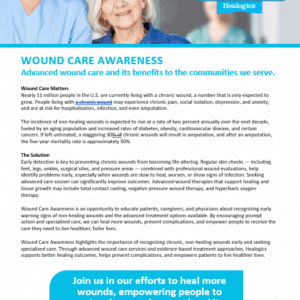
Wound Care Awareness Editorial

Wound Care Awareness Social Media Graphics
Common Types of Chronic Wounds
Diabetic Foot Ulcer
- Typically occurs on the feet, heel, or toes
- Often, there is little to the ulcer itself
- Skin on the legs and feet may be dry
and flaky
Arterial or Ischemic Ulcer
- Leg pain may worsen when the leg
is elevated - Shiny or tight, hairless skin
- Skin that is cool or cold to the touch
- Minimum drainage from the wound
- A round wound with even edges or
the look of being punched out
Venous or Stasis Ulcer
- Leg pain or achiness
- Swelling in the leg, especially at the end of the day
- Discolored skin in the area above the ankle
- Moderate to heavy drainage from the wound
Pressure Ulcer
- Most commonly found over a bony prominence
- Ulcers begin as pressure injuries with non-blanchable redness
- If untreated, subcutaneous fat becomes visible
- Continued tissue loss leads to exposed muscle, tendon or bone
Start your journey to healing.
We partner with more than 600 hospitals nationwide to provide standard and advanced would care for patients with chronic, non-healing wounds. Find a Healogics Wound Care Center near you and get on the road to healing.