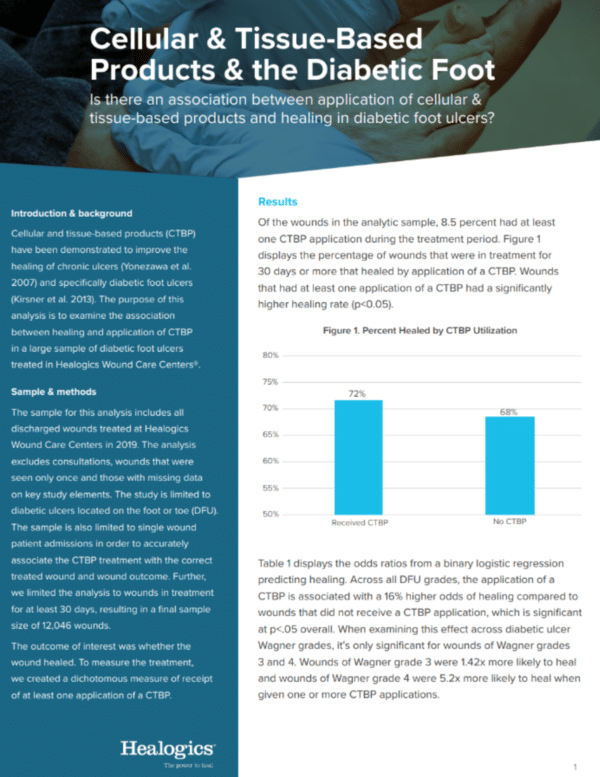
This analysis measured the association between healing and cellular tissue product (CTP) application in a large sample of diabetic foot ulcers (DFUs). The results suggest that application of a CTP increased the probability of DFU healing, particularly in Wagner grades 3 and 4 wounds. However, CTP application was only measured as a binary outcome, and…
Learn More
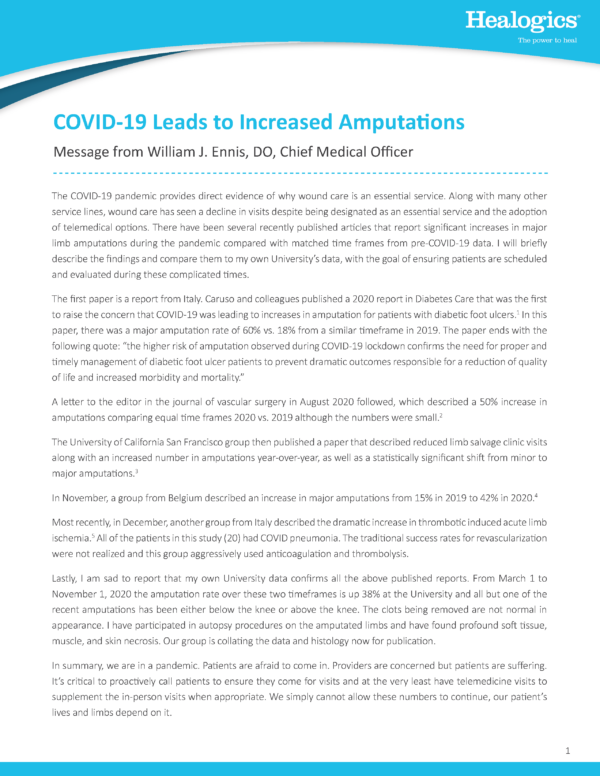
The COVID-19 pandemic provides direct evidence of why wound care is an essential service. Along with many other service lines, wound care has seen a decline in visits despite being designated as an essential service and the adoption of telemedical options. There have been several recently published articles that report significant increases in major limb amputations during the pandemic compared with matched time frames from pre-COVID-19 data.
In this article, Dr. Ennis briefly describes the findings and compares them to his own University’s data, with the goal of ensuring patients are scheduled and evaluated during these complicated times.
Learn More
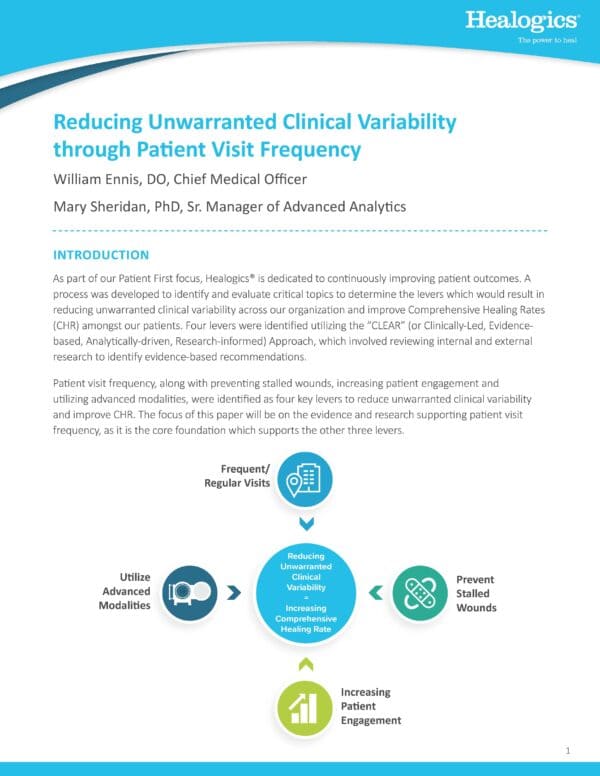
Healogics developed a process to identify and evaluate critical topics to determine the levers which would result in reducing unwarranted clinical variability across our organization and improve Comprehensive Healing Rates (CHR) amongst our patients.
Learn More
Speaking from four separate rooms in four different corners of the world, William Ennis, Desmond Bell, Michael Edmonds, and William Li expounded over zoom on the myriad ways in which COVID-19 had impacted multidisciplinary wound care, both in terms of the disruption the pandemic had caused to their daily practices, and how the echoes of this disruption would ripple into the future. They also touched on the interrelationship between diabetes and COVID-19, questioning what the downstream effects will be in the vulnerable diabetic population.
Learn More
We continue to monitor the current information about COVID and there appears to be two new developments that should be of interest to our Healogics community. The first is the concept of “thrombo-inflammation” and how it might develop in COVID patients leading to clots, strokes and heart attacks. It is also possible that this thrombo-inflammation might be the cause of the recently described finding known as “COVID toes.”
Learn More
The AAWC sponsored a one-hour webinar on the use of HBO therapy for patients with progressive hypoxia unresponsive to oxygen therapy. The webinar was hosted by Dr. Tom Serena, past president of AAWC and Dr. Kerry Thibodeaux from Opelousas Medical Center in Louisiana.
Learn More
Healogics is proud to announce the launch of the Healogics Telehealth Program. The program is available immediately, providing patients access to continued wound care during Center disruptions related to COVID-19.
Learn More
Healogics Chief Medical Officer, Dr. William Ennis, assesses the impact of coronavirus on wound care patients and practice.
Learn More
The rapidly evolving COVID-19 pandemic in the United States has hospitals and acute care facilities changing standard operating procedures to prepare for the expected influx of infected patients. As a result, services, procedures, and surgeries that are deemed “non-essential” are being shut down immediately, without thorough consideration of the ramifications. The Alliance of Wound Care Stakeholders is concerned that this decision will result in unintended negative consequences that will cause a gradual influx of patients to the emergency department.
Learn More
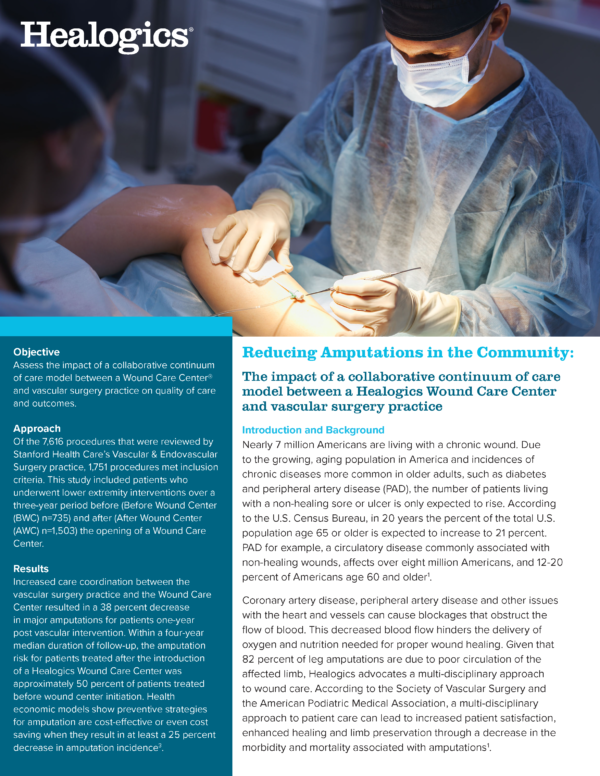
Healogics assessed the impact of a collaborative continuum of care model between a Wound Care Center® and vascular surgery practice on quality of care and outcomes. Of the 7,616 procedures that were reviewed by Stanford Health Care’s Vascular & Endovascular Surgery practice, 1,751 procedures met inclusion criteria. This study included patients who underwent lower extremity interventions over a three-year period before and after the opening of a Wound Care Center.
Learn More