Diabetes Awareness Month: The Foot Wounds Many People with Diabetes Don’t Feel
Every year during Diabetes Awareness Month, healthcare organizations across the country work to increase understanding of the long-term complications associated with diabetes. While many people are familiar with concerns such as vision loss, kidney disease, and cardiovascular health, fewer realize that diabetes can affect the ability to feel pain, pressure, or injury in the feet.
This loss of sensation, known as diabetic neuropathy, is one reason diabetic foot ulcers often go unnoticed until they become difficult to treat. Understanding how these wounds develop and knowing what signs to watch for can help people living with diabetes take steps to protect their health and mobility.
When a Wound Doesn’t Hurt
Most people rely on pain as a warning sign that something is wrong. A blister from a new pair of shoes, a small cut, or a pressure injury typically gets our attention because it hurts. For people with diabetic neuropathy, that warning system may not work as expected.
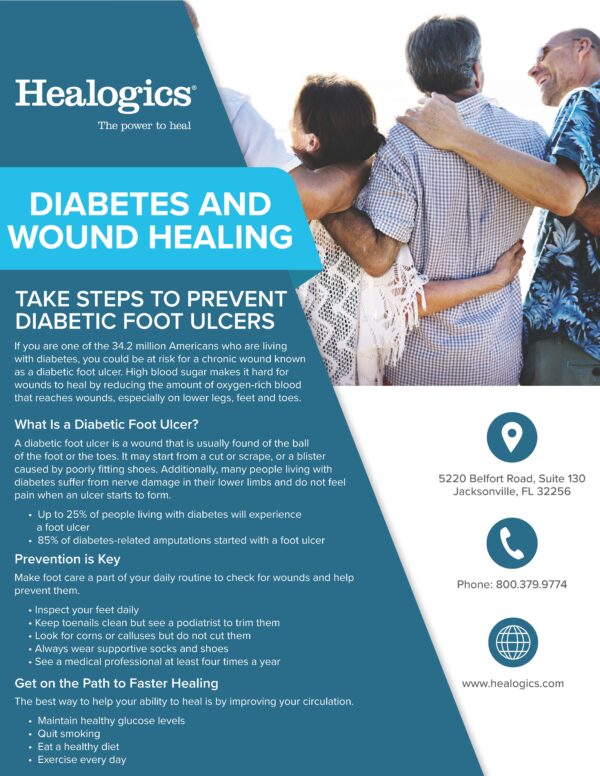
Over time, elevated blood sugar levels can damage nerves, particularly in the feet and lower legs. As sensation decreases, a person may not notice a developing wound, persistent pressure from footwear, or even a minor injury. What begins as a small blister or callus can gradually develop into a diabetic foot ulcer without causing significant discomfort. Research estimates that between 19% and 34% of people living with diabetes will develop a foot ulcer during their lifetime.
What Is a Diabetic Foot Ulcer?
A diabetic foot ulcer is an open wound that develops on the foot, heel, or toes of a person living with diabetes.
These wounds most commonly occur when several factors combine:
- Diabetes-related nerve damage reduces sensation.
- Pressure or friction injures the skin.
- Healing is slowed by underlying health conditions.
- The wound goes unnoticed or untreated.
Without proper care, diabetic foot ulcers can become more serious and may lead to infection, hospitalization, or other complications. Foot ulcers continue to be one of the most significant complications associated with diabetes-related limb loss.
Signs You Shouldn’t Ignore
Because diabetic foot ulcers may not cause pain, regular foot inspections are important.
During Diabetes Awareness Month, consider taking a closer look at your feet and watching for:
- Cuts, blisters, or open sores
- Redness or swelling
- Drainage on socks or footwear
- Changes in skin color
- Areas of thickened skin or calluses
- Unusual odor from a wound
- A wound that doesn’t appear to be improving
Even minor changes deserve attention. Early evaluation can help identify concerns before they become more difficult to manage.
Why Early Detection Matters
One of the biggest challenges with diabetic foot ulcers is delayed recognition. When wounds remain untreated, they may become larger, deeper, or infected. Because many people do not feel pain associated with these wounds, they may postpone seeking care until significant damage has occurred.
The encouraging news is that early intervention often provides more opportunities to address factors affecting wound healing and help prevent complications.
Simple Steps to Protect Your Feet
Diabetes Awareness Month is a great reminder to make foot health part of your daily routine.
Experts recommend:
- Checking your feet every day
- Looking between your toes and on the bottoms of your feet
- Wearing properly fitting shoes
- Never walking barefoot
- Managing blood sugar levels as directed by your healthcare provider
- Scheduling routine foot examinations
- Reporting any new wounds or changes promptly
Current diabetes care guidelines continue to emphasize the importance of regular foot evaluations and ongoing monitoring for individuals at risk.
A Small Wound Can Be Easy to Miss
The biggest takeaway this Diabetes Awareness Month is simple: not every serious wound hurts. If you live with diabetes, taking a few minutes each day to inspect your feet could make an important difference. Paying attention to small changes, recognizing the signs of a diabetic foot ulcer, and seeking care early may help reduce the risk of more serious complications down the road.
Sometimes the wounds that are easiest to overlook are the ones that need attention the most. Chronic, non-healing wounds need advanced wound care. Find a local Wound Care Center®, where healing happens.