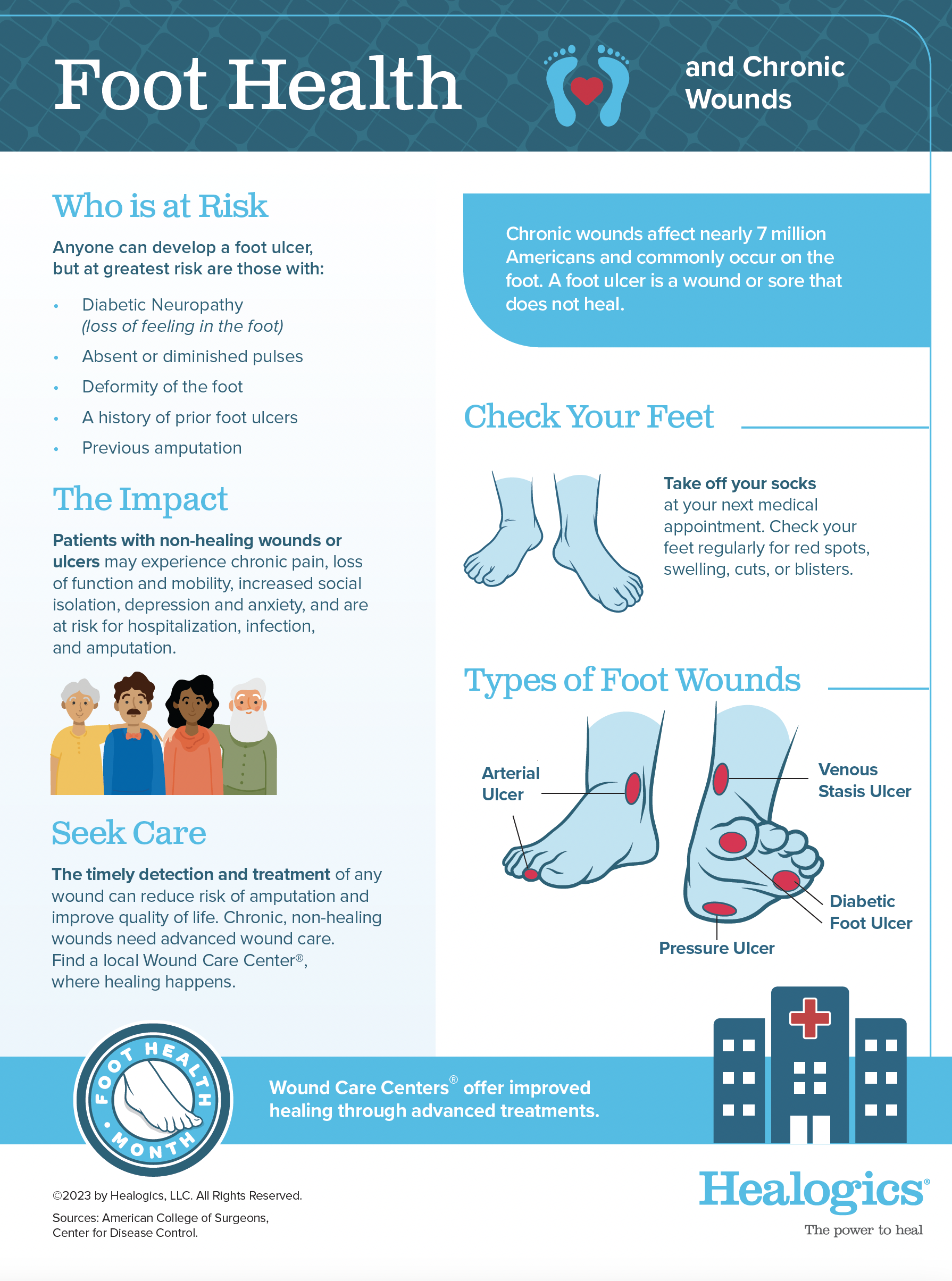
Understanding Common Foot Wounds
Nearly 7 million Americans are living with a chronic wound, and the feet and lower legs are among the areas at greatest risk. A non-healing wound on your foot can lead to serious complications if not treated properly. Early identification and intervention are essential to prevent infection, hospitalization, or even amputation. At Healogics, we specialize in healing chronic wounds and helping you prevent them from returning. This guide will help you understand the common types of foot wounds, their causes, symptoms, and the advanced treatment options available to you.
What Are the Symptoms?
Recognizing the early signs of a wound is crucial for preventing serious complications. Common symptoms to watch for include:
- Drainage from your foot that might stain your socks or leak out of your shoe.
- Unusual swelling, irritation, or redness in a specific area.
- An unusual odor from one or both feet.
- A visible sore, cut, or blister that is not healing.
- Pain or tenderness in the affected area.
Common Types of Wounds:
- Diabetic Foot Ulcer: These ulcers are a common complication of diabetes, often caused by nerve damage (neuropathy) and poor circulation. They can appear anywhere on the foot but are most frequently found on the big toes, the balls of the feet, or the heels.
- Venous Stasis Ulcer: Caused by damaged veins that allow blood to pool in the lower legs, leading to increased pressure and the breakdown of skin. These ulcers typically occur on the ankle or lower leg area.
- Arterial Ulcer: Also known as ischemic ulcers, these are caused by poor circulation from blocked arteries. These sores often occur between the toes, on the tips of toes, or on the outer ankle.
- Pressure Ulcer: Also known as pressure injuries or bedsores, these are caused by prolonged pressure on the skin. For the feet, they are most commonly observed on the heels or ankle area, especially from improper shoes or a lack of movement.
Are you at risk?
Anyone can develop a foot ulcer, but you are at greater risk if you are living with:
- Diabetes or diabetic neuropathy
- Poor circulation in your legs (Peripheral Artery Disease)
- Deformity of the foot
- A history of prior foot ulcers
- Previous amputation
When to Seek Medical Care
You should seek medical care from a wound care specialist if you have a sore on your foot that has not started to heal in two weeks or is not completely healed in six weeks. Seek immediate medical care if you experience any of the following:
- A fever or chills with a foot wound
- Increased pain, swelling, or redness
- A deep wound that shows bone or tendon
- Foul-smelling discharge from the wound
Basic Foot Health Guidelines:
- Don’t go barefoot, even indoors.
- Inspect your feet daily. Use a mirror to look for any cuts, sores, or changes in color, and be sure to look between your toes. Ask for help if you cannot see the bottoms of your feet.
- Wash your feet daily with lukewarm water and mild soap. Dry them thoroughly, especially between the toes.
- Moisturize your feet daily to prevent cracking, but avoid getting lotion between your toes.
- Wear properly fitting shoes and clean, dry socks.
- Don’t use garters or elastics to hold up your stockings.
- Don’t use panty girdles that are tight around your legs.
- Avoid exposing your feet to extreme hot or cold temperatures.
Be sure to see your doctor for a foot checkup at least twice a year, especially if you have diabetes. Notify your physician or a wound care specialist immediately if you develop a blister or sore on your foot.
Advanced Wound Care Treatment
If you have a non-healing foot wound, our Wound Care Centers® offer advanced treatments to help you heal. Depending on the type and severity of your wound, your treatment plan may include:
- Debridement: The removal of dead or infected tissue to promote healing.
- Off-loading: Using special footwear or devices to relieve pressure from the wound.
- Hyperbaric Oxygen Therapy (HBO): Breathing 100% oxygen in a pressurized chamber to help fight infection and stimulate healing.
- Cellular and/or Tissue-Based Products (CTPs): Applying skin substitutes to help close the wound.
Frequently Asked Questions
Why won’t my wound heal?
A foot wound may not heal due to underlying conditions such as diabetes, poor circulation, or repeated pressure on the area. Our wound care specialists can diagnose the cause and create a personalized treatment plan.
How can I prevent foot wounds?
You can prevent foot wounds by inspecting your feet daily, wearing proper footwear, managing underlying health conditions like diabetes, and seeking early medical care for any sores or blisters.
What is the difference between a diabetic ulcer and a pressure ulcer?
A diabetic ulcer is primarily caused by complications from diabetes, such as nerve damage and poor circulation, while a pressure ulcer is caused by prolonged pressure on a specific area of skin.
Take the First Step Toward Healing
If you or someone you care for has a wound that is not healing, don’t wait. Our team of wound care specialists is ready to provide the expert care you need to get back on your feet. Find a Center near you today to schedule an appointment.