
Grow your wound care knowledge with resources for providers.
Ongoing education and research is critically important to advancing the field of wound care. To help our provider partners stay informed about the latest wound care best practices and developments, we provide a collection of wound care provider resources, including blog posts, articles, studies, guidelines, webinars and white papers.
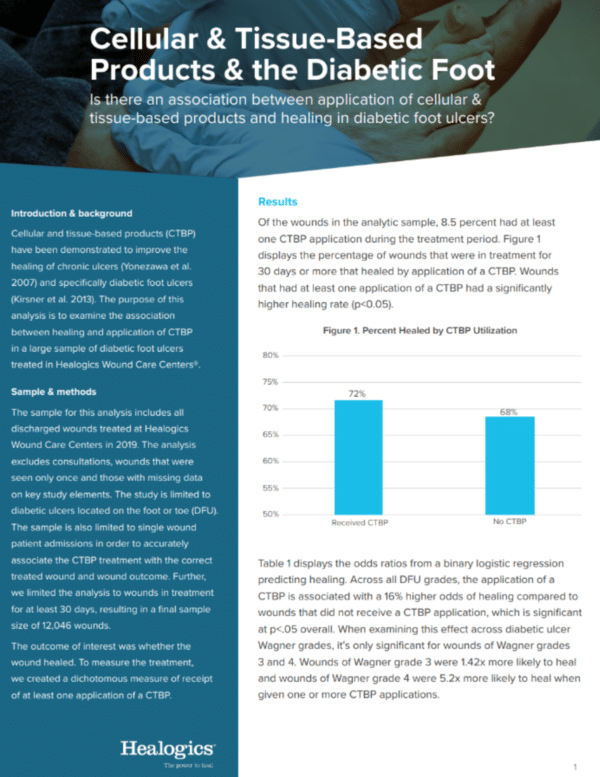
Cellular & Tissue-Based Products & the Diabetic Foot
This analysis measured the association between healing and cellular tissue product (CTP) application in a large sample of diabetic foot ulcers (DFUs). The results suggest that application of a CTP increased the probability of DFU healing, particularly in Wagner grades 3 and 4 wounds. However, CTP application was only measured as a binary outcome, and…
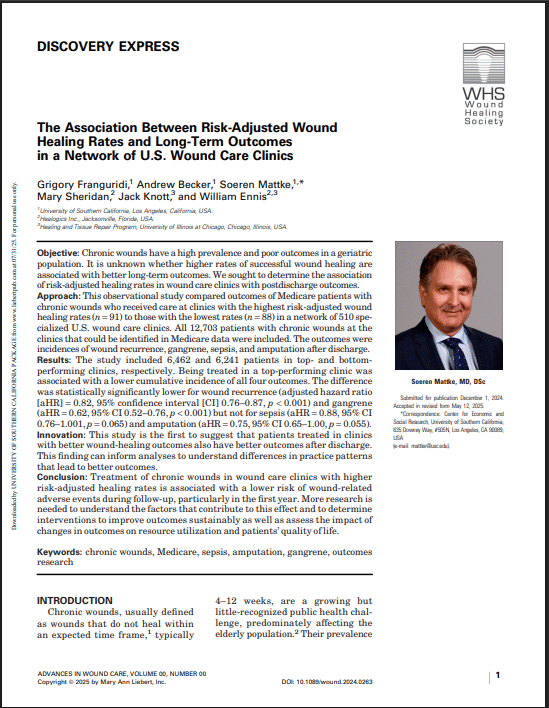
The Association Between Risk-Adjusted Wound Healing Rates and Long-Term Outcomes in a Network of U.S. Wound Care Clinics
Key Takeaways: This study investigated whether post-discharge outcomes of Medicare patients with chronic wounds were better for clinics with high risk-adjusted healing rates than for clinics with low rates. In this observational study, the incidence of wound recurrence and gangrene was significantly lower with adjusted hazard ratios of 0.82 and 0.62, respectively, and the incidence of sepsis and amputation numerically…
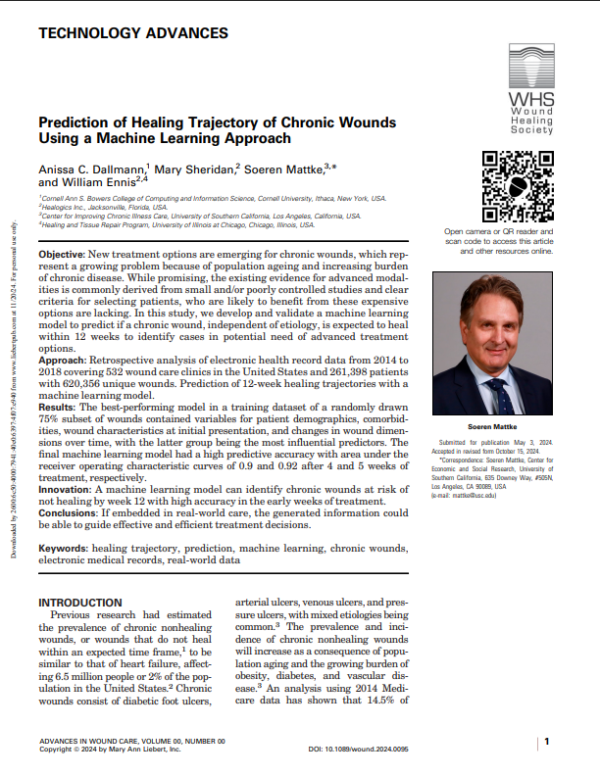
Prediction of a Healing Trajectory of Chronic Wounds Using a Machine Learning Approach
Key Takeaways: Early change in wound size is the dominant predictor of healing. Machine learning substantially outperforms traditional regression models. Predictions become highly accurate by weeks 4–5 of treatment (AUC 0.90–0.92). The model could enable earlier intervention for wounds unlikely to heal, improving outcomes and resource utilization. Read the full publication: prediction of a healing trajectory of chronic wounds using a…
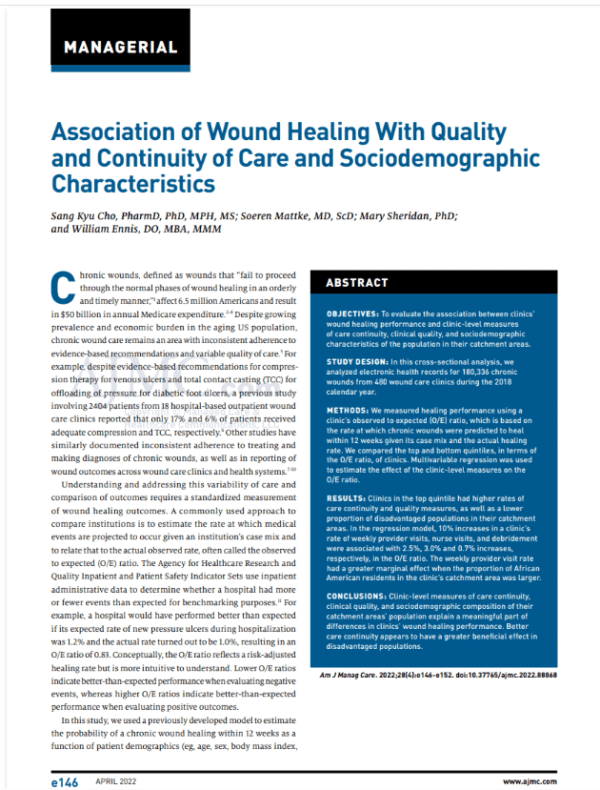
Association of Wound Healing With Quality and Continuity of Care and Sociodemographic Characteristics
Key Takeaways: Continuity of care is the strongest predictor of better healing, and most hospitals struggle to deliver it. Evidence‑based practices, especially debridement procedures separate high performers from low performers. Socioeconomic disadvantage does not reduce outcomes if continuity and quality of care are strong. read the full publication: association of wound healing with quality and continuity of care and sociodemographic…
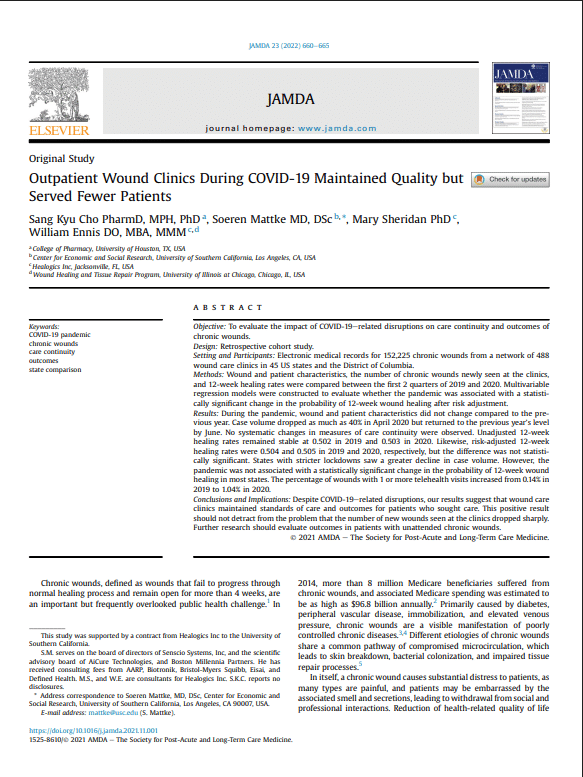
Outpatient wound clinics during COVID-19 maintained quality but served fewer patients
Key Takeaways: Outpatient wound clinics saw significantly fewer patients during the pandemic, especially early in 2020. Despite treating fewer patients and adapting to pandemic restrictions, clinics maintained key quality metrics. Wound care centers implemented new infection-control procedures and workflow changes that allowed them to continue providing effective care. Read the full publication: Outpatient wound clinics during covid-19…
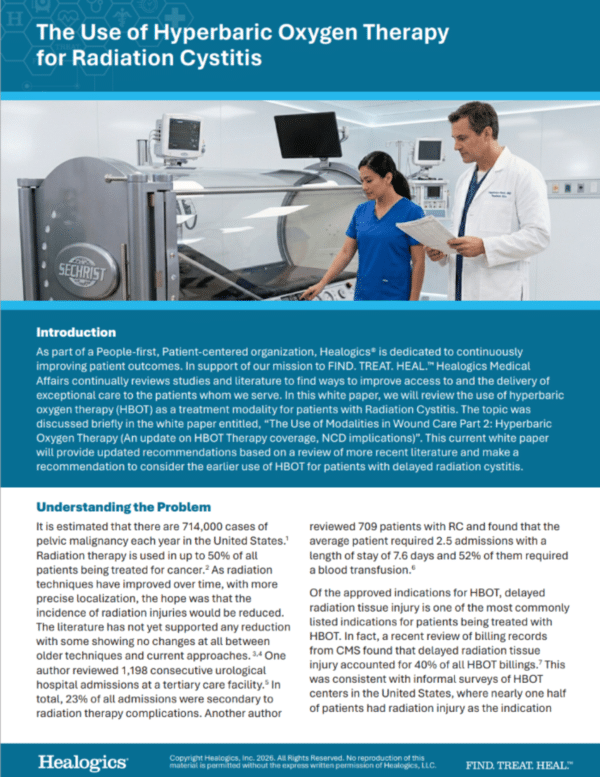
The Use of Hyperbaric Oxygen Therapy for Radiation Cystitis
Key Takeaways Radiation cystitis is a serious long-term complication of pelvic radiation that can cause significant bleeding, repeated hospitalizations, transfusions, and a substantial decline in quality of life. Current treatment options often provide only temporary relief or carry meaningful risks. Rather than simply managing symptoms, HBOT treats the underlying radiation damage by promoting new blood…
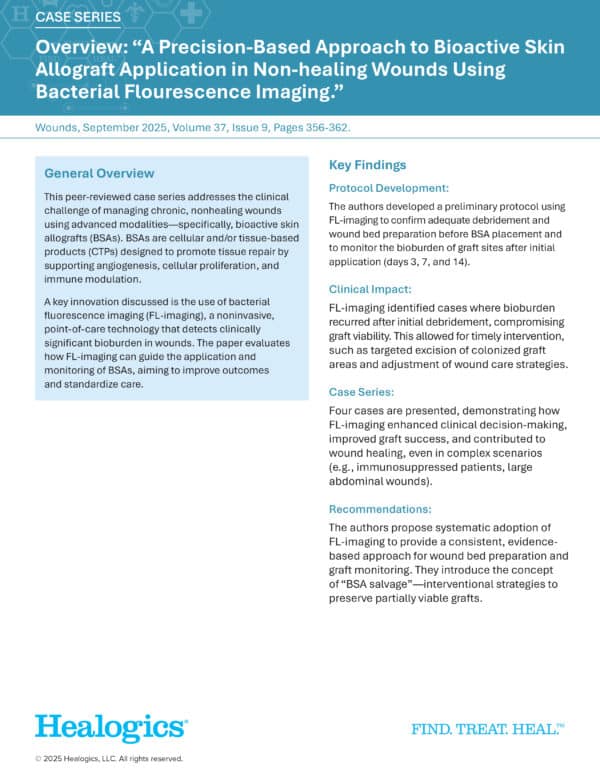
A Precision-Based Approach for Bioactive Skin Allograft Application in Nonhealing Wounds Using Bacterial Fluorescence Imaging
This peer-reviewed case series addresses the clinical challenge of managing chronic, nonhealing wounds using advanced modalities – specifically, bioactive skin allografts (BSAs). BSAs are cellular and/or tissue-based products (CTPs) designed to promote tissue repair by supporting angioenesis, cellular proliferation, and immune modulation. A key innovation discussed is the use of bacterial fluorescence imaging (FL-imaging), a…
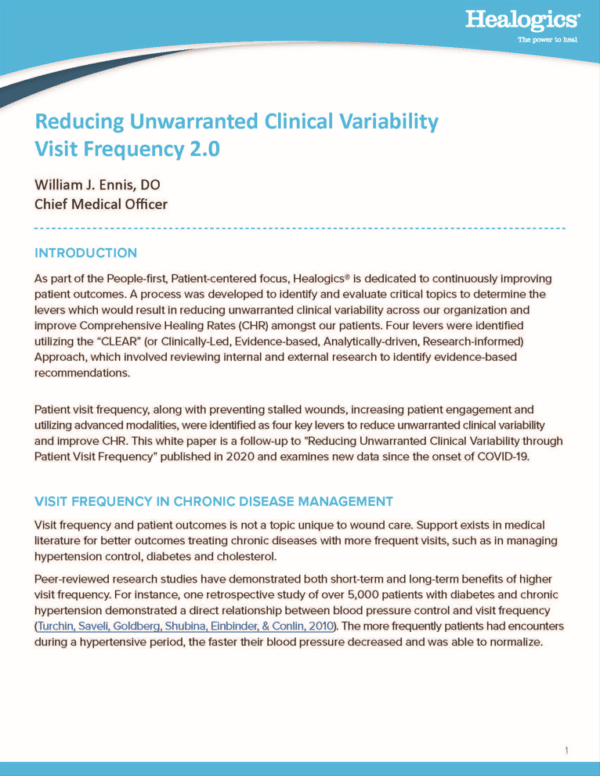
Reducing Unwarranted Clinical Variability Visit Frequency 2.0
As part of the People-first, Patient-centered focus, Healogics® is dedicated to continuously improving patient outcomes. A process was developed to identify and evaluate critical topics to determine the levers which would result in reducing unwarranted clinical variability across our organization and improve Comprehensive Healing Rates (CHR) amongst our patients. Four levers were identified utilizing the…
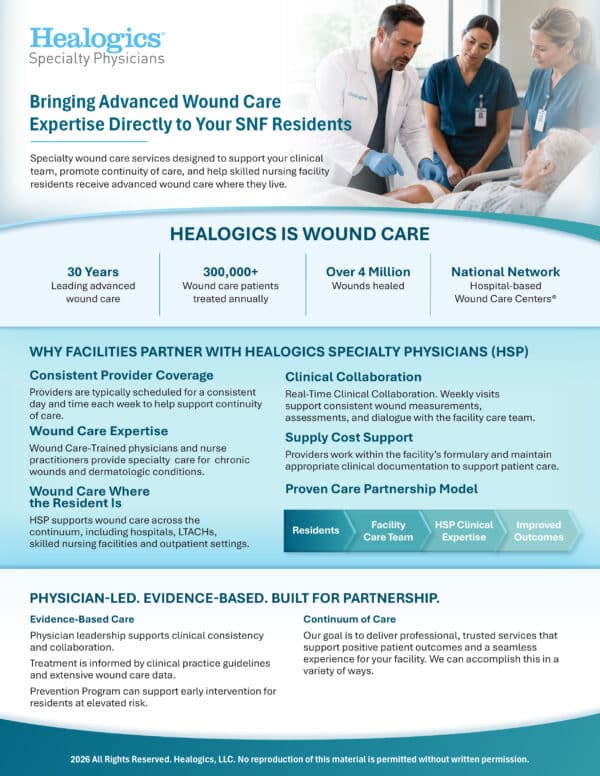
Healogics is your partner for integrated wound care in skilled nursing facilities
Healogics is the nation’s largest world-class wound care provider, delivering compassionate care to more than 300,000 patients each year. Our focus is on providing the highest level of integrated wound care management throughout the continuum of care: post-acute, outpatient and inpatient.